How To Set Up Electricity in Germany: A Guide for Expats
By
Hermann Furin
27.8.2026

How To Set Up Electricity in Germany: A Guide for Expats
You've found an apartment. The keys are in your hand. You flip the light switch and it works. So electricity is handled, right?
Probably not. Or rather, it's handled in the most expensive way available. Germany separates two things most countries bundle together: the grid that delivers your electricity, and the company that sells it to you. Your landlord arranges neither. That's your job, and the default option costs you hundreds of euros a year.
At a glance
- Electricity is almost always your own contract, not part of your Nebenkosten
- Without a contract you land in substitute supply, then basic supply
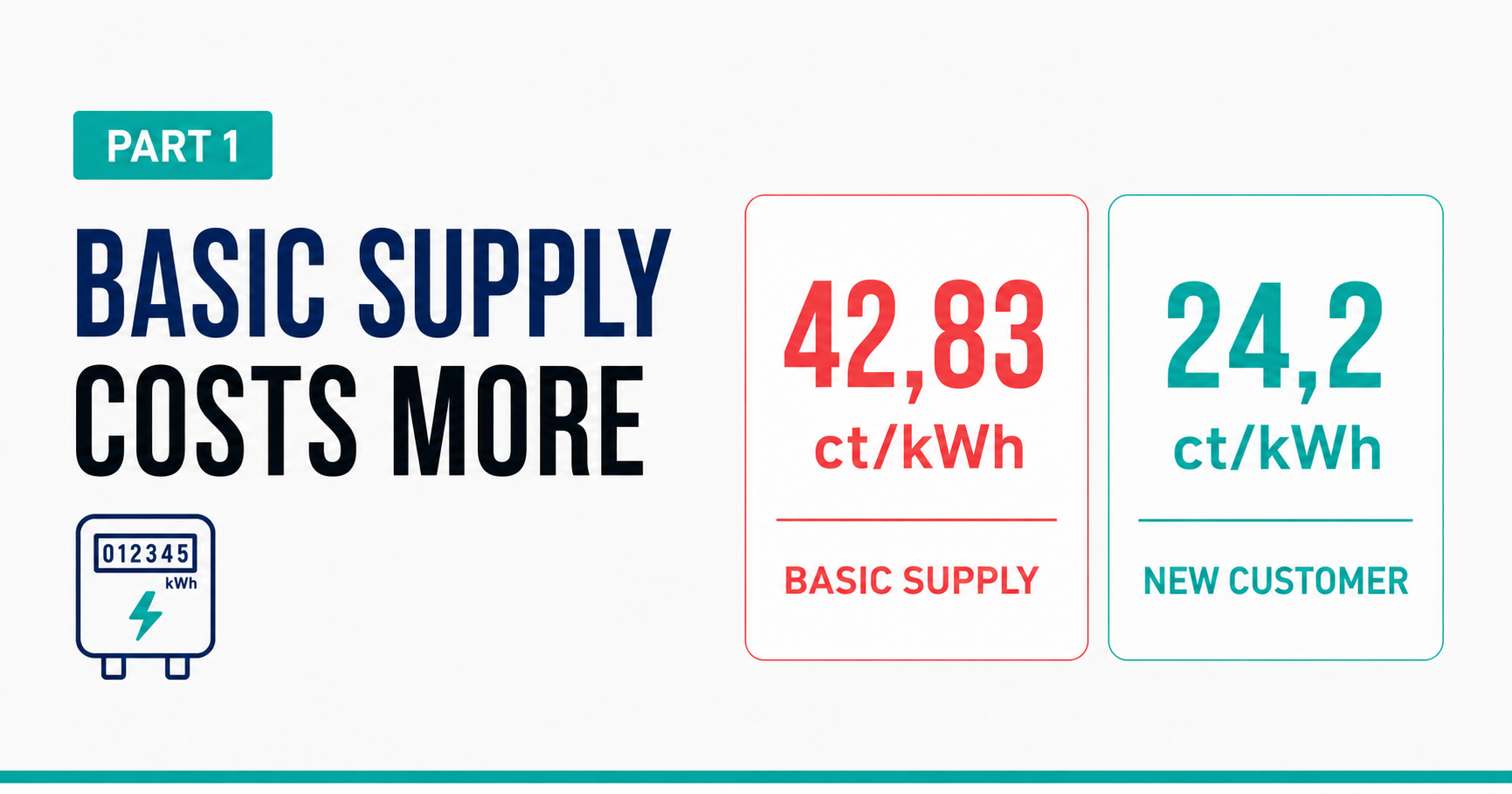
- Basic supply in early 2026 averaged around 42,83 ct/kWh. New-customer tariffs in July 2026 averaged around 24,2 ct/kWh
- On 2,500 kWh a year, that gap is roughly 465,00 EUR
- Since 2026, the technical part of a switch takes at most 24 hours
- A photo of your meter reading on move-in day is your best protection
Do I need an electricity contract in Germany?
In almost every rental, yes. Electricity runs in your name, in your own contract.
Your Nebenkosten (the extra costs on top of your rent) usually cover water, heating, garbage, and building maintenance. Electricity is separate. If your rental listing says "Warmmiete" and says nothing about Strom, assume you need your own contract.
Two exceptions:
- Furnished short-term apartments and coliving, where electricity is sometimes inside an all-in price. Check your contract.
- A few buildings with central hot water running on electricity. Rare, but ask.
What happens if you do nothing?
You still get electricity. The local basic supplier (Grundversorger) is legally required to supply your address, so the lights come on. You land in Ersatzversorgung (substitute supply), which is capped at three months, then roll automatically into the standard Grundversorgung tariff.
That's the expensive part. Households on a basic supply tariff paid around 42,83 ct/kWh on average in early 2026. New-customer tariffs in July 2026 averaged 24,2 ct/kWh. On a 2,500 kWh household, that gap is roughly 465,00 EUR a year. For doing nothing.
Good news: substitute supply has no notice period at all, and basic supply has a two-week notice period. You're never locked in.
Can foreigners sign an electricity contract in Germany?
Yes. Nationality is not a criterion. You don't need German citizenship, a permanent residence permit, or a German passport.
What you actually need:
- A German address
- A SEPA-capable bank account for direct debit. IBANs from other SEPA countries usually work
- Your meter number (Zählernummer)
- Sometimes a credit check (Schufa). A thin or empty Schufa file is normal for new arrivals and rarely blocks a standard tariff
You do not need a German-language contract. Ostrom runs fully in English: contract, app, and support.
Can I get electricity before Anmeldung?
Yes, and you usually should.
Anmeldung (registering your address at the Bürgeramt) is a separate legal obligation. You have 14 days from moving in under §17 Bundesmeldegesetz, and missing it can be fined up to 1.000,00 EUR. But your electricity provider doesn't ask for your Anmeldebestätigung. They need your address, your meter number, and your bank details.
This matters because Anmeldung appointments in Berlin, Munich, and Hamburg can be booked out for weeks. Waiting for that appointment before sorting electricity just leaves you longer on the expensive default.
This order works:
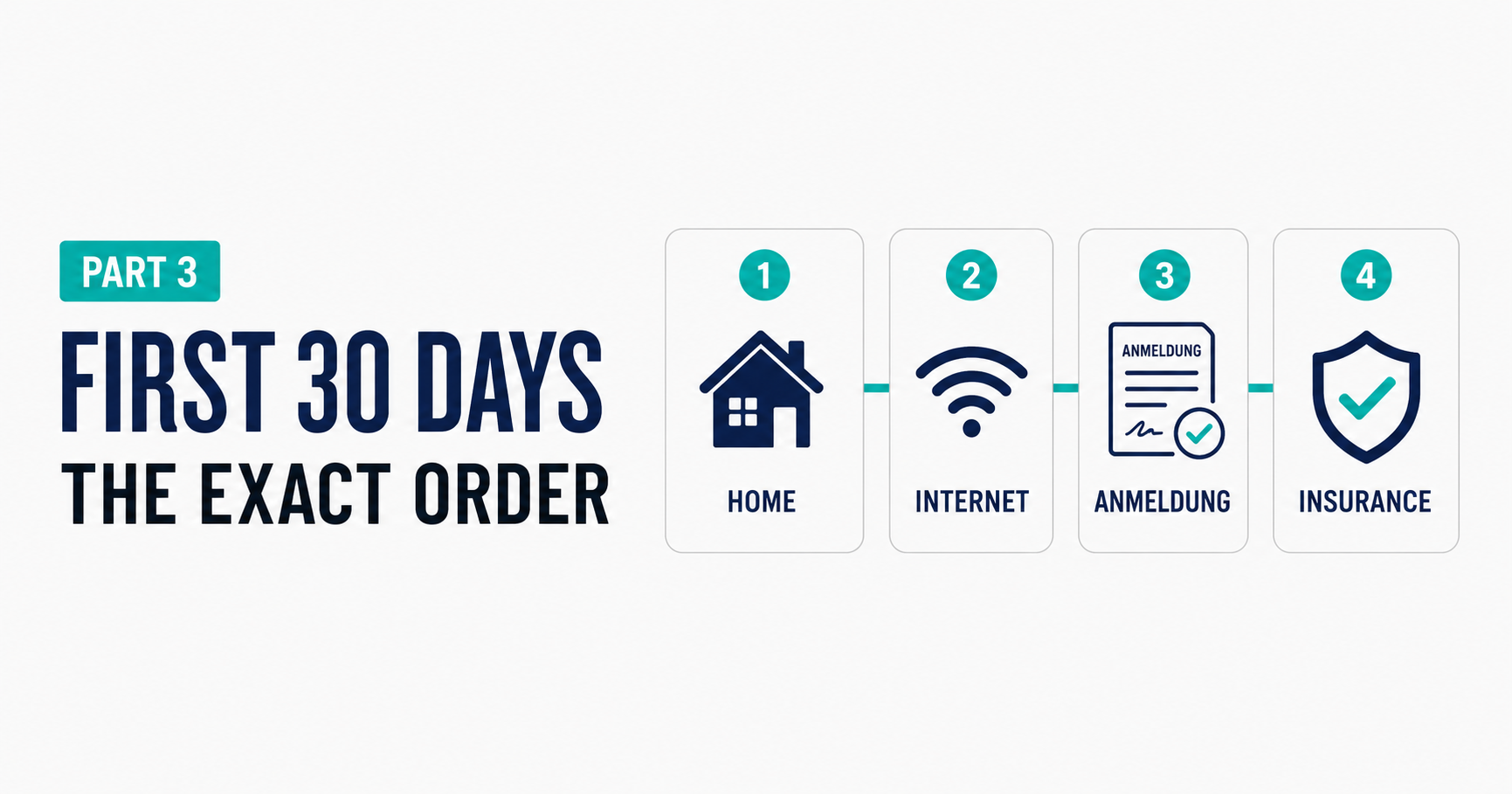
- Sign your rental contract, get the keys.
- Read your meter and photograph it on day one.
- Sign up for electricity with your move-in date as the start date.
- Book and attend your Anmeldung.
Where to find your meter number
The Zählernummer is a 10 to 14 digit number printed on the meter itself, usually in the basement, a hallway cupboard, or a utility closet. It sits on a label near the display, sometimes prefixed with "Nr." or a barcode.
If you can't reach the meter, look at:
- The handover protocol (Wohnungsübergabeprotokoll) from your landlord
- Any old bill left behind in the apartment
- Your landlord or building manager (Hausverwaltung)
You can also sign up without it and add it later. It just slows things down.
Photograph the meter reading (Zählerstand) on your move-in day. This is your proof of where your consumption starts. Without it, you can end up paying for the previous tenant.
How long does it take to activate electricity in Germany?
Faster than it used to be. Since June 2025, and fully binding from 01.01.2026, the technical part of a supplier switch has to happen within 24 hours on any business day, under §20a Energiewirtschaftsgesetz. The full process, from your new provider notifying the grid operator to the switch going live, must not exceed three weeks.
In practice:
- New registration at an address with no running contract: supply starts on your move-in date, no gap.
- Switching out of basic supply: two weeks' notice, then live.
- Switching from a running fixed contract: depends on your notice period, typically one month.
Your lights never go out during a switch. The grid operator (Netzbetreiber) keeps delivering electricity no matter who bills you. Nobody flips a physical switch anywhere.
What to look for in a provider
Ignore the ranking on Check24 and Verivox for a moment and check these:
Contract length. Twelve or 24 months locks your price, but it also locks you in. If you're not sure how long you're staying, a monthly cancellable tariff is worth more than a small discount.
Bonus math. Many German tariffs advertise a low first-year price built on a one-time Neukundenbonus, then jump in year two. Compare the price without the bonus.
Price Guarantee. Useful if you want certainty. Check what it covers. Some guarantees exclude taxes, levies, and grid fees, which is where most increases come from.
Language and support. If everything runs in German, every billing question becomes a translation exercise. For international households that's a real criterion, not a nice-to-have.
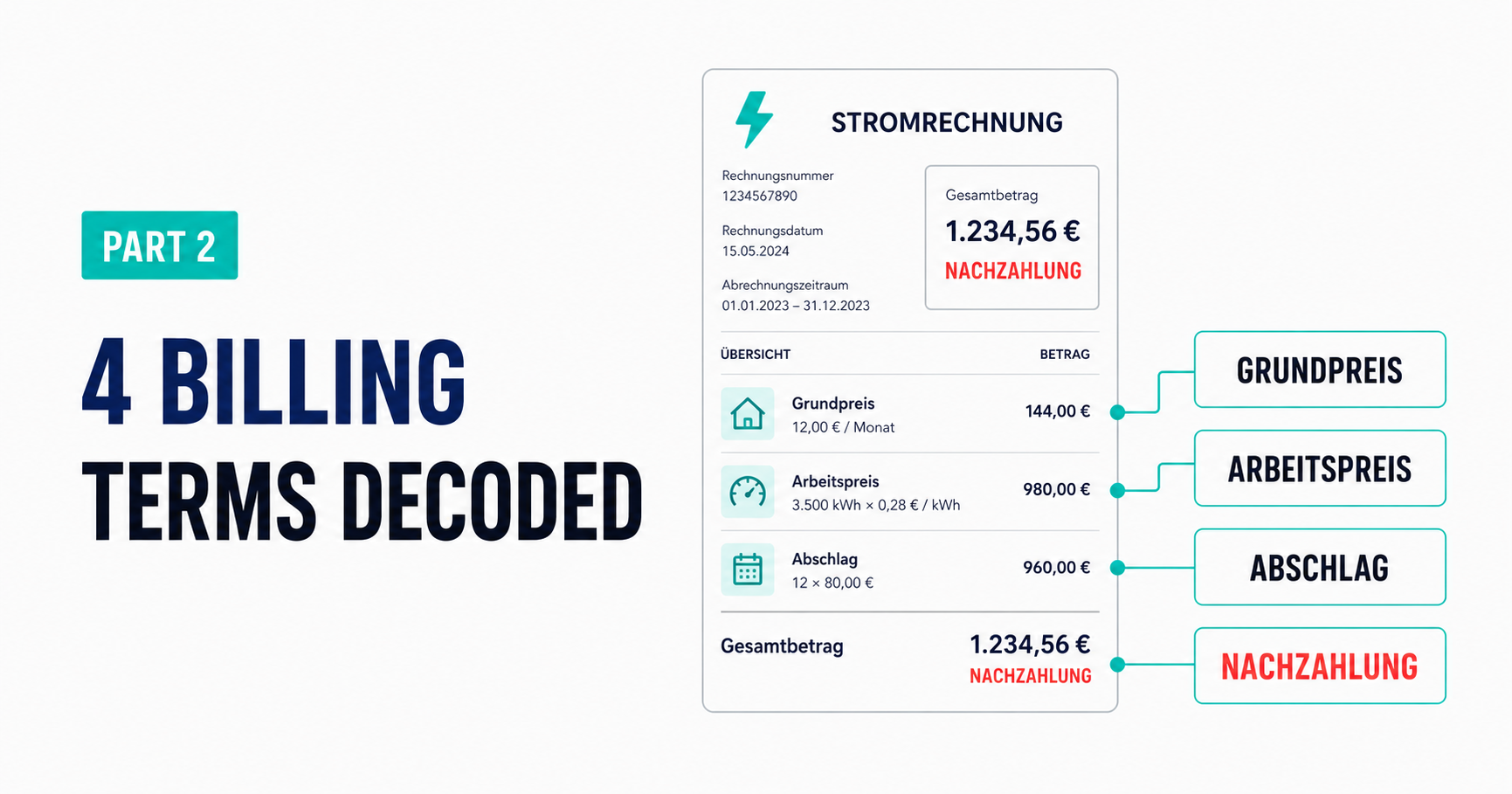
Deposit accuracy. German providers charge a Monthly Deposit (Abschlag) based on estimated annual consumption, then settle once a year. A deposit set too high is an interest-free loan to your provider. Too low means a painful Nachzahlung.
Why expats end up with Ostrom
We built Ostrom for people who don't want to fight German bureaucracy in a second language.
- Fully in English: contract, Ostrom App, and support
- Monthly cancellable, no minimum term. Change cities or leave the country with one month's notice
- 100 % green electricity from German renewables
- Transparent pricing. One kWh price, one base price, no bonus games
- Adjust your Monthly Deposit yourself in the Ostrom App, any time
- Sign up in about five minutes with your address and meter number
FAQ
Can I sign up before I have the keys?
Yes. Enter your move-in date as the supply start date. Most providers accept a start date up to six weeks ahead.
Do I need a German bank account?
For most providers a SEPA-capable IBAN is enough. Accounts from other SEPA countries usually work.
What if the previous tenant's contract is still running?
It doesn't block you. Your provider registers your meter with your move-in reading. The old contract ends at the previous tenant's move-out reading.
Who do I call if the power goes out?
Your grid operator (Netzbetreiber), not your electricity provider. The grid operator is listed on your bill and handles the physical connection and the meter.
Do I need a smart meter?
Not for a standard tariff. Installation is being phased in as mandatory for households above 6,000 kWh a year, solar systems above 7 kW, and controllable loads like heat pumps and wallboxes. You can also request one voluntarily.
Is heating included in my electricity contract?
Usually not. Most German apartments heat with gas or district heating, billed through your Nebenkosten. Only with a heat pump or electric heating does it run through your electricity contract.
Can I keep my provider when I move within Germany?
With most providers yes, including us. You report the new address and meter number, and the contract follows you.


Green Energy Made Easy
Switch and save in only 5 minutes