Green Energy Made Easy
Switch and save in only 5 minutes!
Thank you! Your submission has been received!
Oops! Something went wrong while submitting the form.
Energy
By
David Wölfle
8.4.2026

10
Min.

A household with an electric vehicle and electric heating can save up to 653 €per year with a dynamic electricity tariff – without reducing consumption.
That means:
In this article, you’ll learn how these savings are achieved and whether you can benefit as well.
Dynamic electricity tariffs are one of the biggest innovations in the energy market in recent years.
Many people ask the same questions:
This article answers exactly that – based on real consumption data.
For this analysis, we look at a sample household:
This is exactly the type of household that is becoming more common. It also shows that you can benefit from dynamic tariffs even without a solar system or home battery.
This household has neither solar panels nor a home battery – and still benefits from cheap solar electricity at midday.
You could even say: as a dynamic tariff user, you’re tapping into Germany’s largest solar power plant. You benefit from the low-cost electricity of all solar systems feeding into the grid.
The difference is clear: With a consumption of 3,100 kWh, our example customer paid only 591 €for electricity in 2025, which corresponds to an average price of 18.67 cents per kWh.
For comparison – with the exact same consumption, they would have paid more with other tariffs:
= Savings: up to 653 €per year

And here’s the key point:
The advantage is also clear in percentage terms:

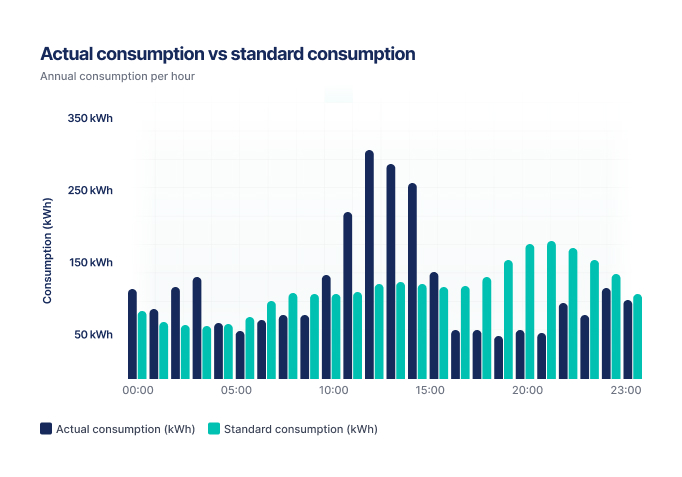
The biggest lever is surprisingly simple: Not how much you use – but when.
The consumption data clearly shows: electricity usage increases when energy is cheap and drops during expensive hours.
Typical real-life examples:
The result: same comfort, significantly lower costs.
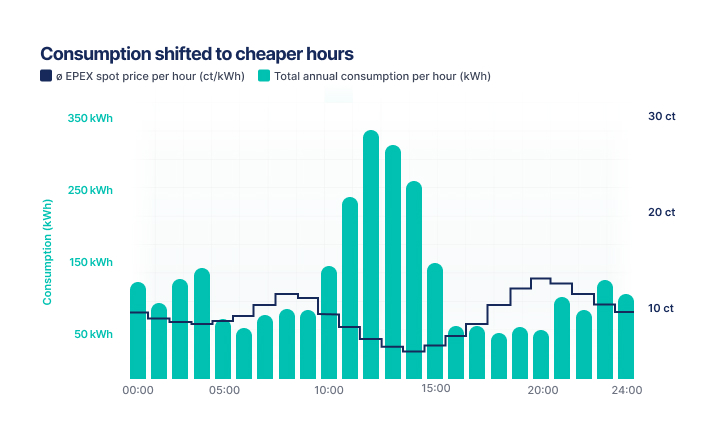
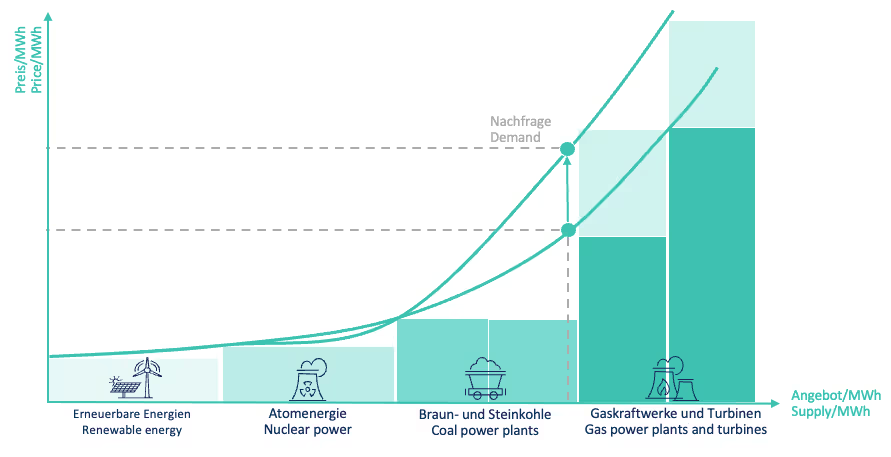
Electricity prices on the exchange fluctuate significantly throughout the day, depending on how much renewable energy is available:
A dynamic tariff passes these prices on to you directly and transparently.
So you pay:
By intelligently shifting your consumption, you can take advantage of the cheaper hours. Many device manufacturers already offer this optimization directly in their apps.
Or even better: connect your devices directly to the Ostrom app and let your EV, for example, charge automatically when electricity is cheapest.
The key difference compared to traditional fixed-price tariffs is that you’re not just paying an average price – you can actively benefit from the cheapest hours.
One of the most common concerns is: “What happens if prices suddenly spike?”
Yes, this can happen. Individual hours with very high prices may occur, for example, when renewable generation is low and demand is high.
However, two things are important:
With a traditional fixed-price tariff, you always pay the same price per kilowatt-hour, including risk premiums from the provider.
In practice, this means:
If you don’t have controllable devices like an EV or a heat pump, a dynamic tariff is less beneficial because you can’t actively shift consumption. They can still make sense, but if you prefer a fixed tariff you can take a look at our SimplyFair12. Once you have controllable devices, you can switch to a dynamic tariff.
The key question is: “Do I need to constantly manage this?”
In short: No – especially not with the right tools.
With the Ostrom app, you can connect devices like your EV or wallbox and automatically control when they run, so you always use the cheapest electricity – without daily effort.
Many device manufacturers have already integrated similar optimization features into their apps because the benefits are clear.
So you have multiple ways to automate your consumption without constantly changing your behavior. This makes dynamic tariffs easy to use in everyday life and allows more households to benefit from the savings.
Especially worthwhile if you:
Less suitable if you:
You don’t need a large solar system or home battery to benefit. Rule of thumb: the greater your flexible consumption, the higher your savings potential with a dynamic tariff.
Dynamic tariffs are especially beneficial if you have large consumers like an EV or heat pump. Without them, you can shift less consumption to cheaper times – but that doesn’t mean you can’t benefit at all.
Here’s another example: a customer without such devices, consuming around 3,400 kWh per year.
→ Savings: 55 €
Compared to the BDEW average (1,341 €), the savings are even 328 €.
This shows: even without controllable devices, you can save by shifting usage – for example, running your washing machine at midday.
This case study clearly shows: saving several hundred euros is realistic.
Without sacrificing comfort. Without using less electricity.
And even without an EV or heat pump, you can still save a bit by shifting your consumption to cheaper times.
The difference lies entirely in when you use electricity.
Switch to Ostrom and start saving. Switch now.





.avif)